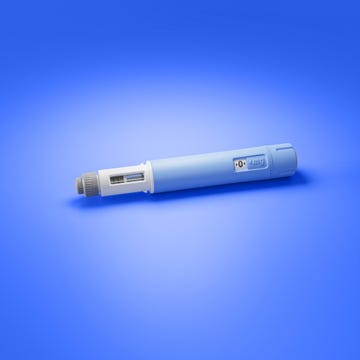
Ever since Ozempic started to get prescribed off-label for weight loss, obesity treatment—and our culture at large—has changed. At first, because of the demand, there were shortages. Now, you can get a GLP-1 (the class of meds that Ozempic falls under) prescribed online pretty easily as long as you’re willing to pay for it.
Chances are you know someone (or you follow a celeb) who's on the drug, but you may not know exactly what it is—or if it's the right approach to help you lose weight. Although Ozempic has been enveloped in a cloud of contentious ethical and pop culture discussions, doctors say that this shouldn't distract from the fact it is a real medication that can help people who need it. There are legitimate and practical reasons why someone may benefit from using Ozempic for weight loss—and thrive because of it. But there are also solid indicators that you don't need to be using the drug.
Meet the experts: Gitanjali Srivastava, MD, is the medical director of Vanderbilt Obesity Medicine. Kunal Shah, MD, is an assistant professor in the division of endocrinology at the Rutgers Robert Wood Johnson Medical Center. Mir Ali, MD, is a bariatric surgeon and medical director of MemorialCare Surgical Weight Loss Center at Orange Coast Medical Center in Fountain Valley, California.
If you're curious to know more, here’s experts' best advice on when it actually makes sense to go on Ozempic.
First: What is Ozempic and how does it work?
Let’s start at the beginning. Ozempic (generic name: semaglutide) is a prescription injectable medication approved by the FDA for adults with type 2 diabetes. The medication helps the pancreas release the correct amount of insulin when someone's blood sugar is too high. It can also lower the risk of stroke, heart attack, or death in people with type 2 diabetes.
But, as doctors (and patients) discovered, that's not all. Ozempic can also result in significant weight loss, which has resulted in it being prescribed off-label for that benefit. It works by mimicking a gastrointestinal hormone that aids in digestion and signals satiety. Basically, on Ozempic, patients stay fuller for longer and eat less, resulting in weight loss, says Kunal Shah, MD, an assistant professor in the division of endocrinology at the Rutgers Robert Wood Johnson Medical Center.
Ozempic belongs to a class of medications known as GLP-1 agonists, a list that includes Wegovy and Zepbound, which are approved for weight loss, and Rybelsus and Monjauro, which are not.
What requirements should you meet before taking Ozempic?
The FDA states that Ozempic should be prescribed under certain circumstances. Technically, in order to use it, you should meet the following criteria:
- Have type 2 diabetes
- Have already tried to manage your diabetes with diet and exercise and failed
Despite not being FDA-approved for weight loss, though, people are still getting it prescribed off-label by their doctors to shed pounds. Ozempic does have some side effects and has also has been shown to cause thyroid C-cell tumors in rat studies. However, the FDA stresses that it’s “unknown” whether Ozempic has the same effect in humans. To be safe, people with a family or personal history of thyroid cancer probably shouldn't take Ozempic.
What other options should I consider if I don't have diabetes?
There is another version of a semaglutide injectable medication, Wegovy, that comes as a higher 2.4 milligram dose (Ozempic is usually 2.0 milligrams), and is FDA-approved for weight loss. Ozempic is “the same [as Wegovy]…for all intents and purposes,” says Dr. Shah.
When it comes to using meds to lose weight, in addition to Ozempic and Wegovy, both of which are semaglutides, there are also Mounjaro and Zepbound, which are tirzepatides. The biggest difference? Tirzepatides target an additional receptor that plays a role in your body's hunger and satiety cues—and might result in slightly more weight loss.
Consider this too: You have to inject these medicines into your body. If that freaks you out, or you have a fear of needles, they might not be right for you. A Wegovy pill was just approved by the FDA, and more pill options are coming soon.
Really, though, the right GLP-1 is individual, so work with your doctor to figure out the best options. Tolerance to side effects might help sway your decision, as will insurance coverage. “Insurance may likely cover Wegovy if you have a BMI over 30 or are overweight with certain risk factors such as high blood pressure, cardiovascular disease, arthritis, diabetes, or sleep apnea,” Dr. Shah says.
Can Ozempic be used for short-term weight loss?
No. Ozempic requires long-term, consistent use, Mir Ali, MD, a bariatric surgeon and medical director of MemorialCare Surgical Weight Loss Center at Orange Coast Medical Center, says. That means you should absolutely not consider it if you're just trying to lose a few pounds or fit into a dress before an event; it’s for people with obesity and/or diabetes, and is considered a medication you'd take for the foreseeable future.
Plus, studies have shown that in just about two years following the cessation of weight loss meds, weight and cardiometabolic improvements are lost, meaning docs don't really recommend it for short-term use.
Ultimately, if you are considering Ozempic for weight loss, it warrants a candid conversation with your doctor.
If you're concerned about your ability to lose weight and are at a weight that puts you at an increased risk for certain health complications, it’s worth talking to your doctor about options, including whether a semaglutide injection may work for you.
“If you are generally interested in help in losing weight, it can be helpful,” Gitanjali Srivastava, MD, the medical director of Vanderbilt Obesity Medicine, says. “Maybe you have joint aches or pains from excess weight, or maybe you want to prevent those complications because you have a family member with obesity.”
While this can be a sensitive topic, Dr. Srivasta explains that “if you go to your doctor and say, ‘I’m concerned about my weight,' your primary care physician should be equally engaged in a conversation about next steps."
Dr. Ali tells patients that it's a tool that can help them settle into a healthier lifestyle, emphasizing a point several doctors have made about the importance of pairing the injection with a healthy diet and exercise. “If a patient is not changing their habits and still eating the wrong things and not exercising regularly, they will have significant weight regain when they stop using it," Dr. Ali says.
Consider the side effects before starting the medication.
Since this is a medication you'd be taking for an extended period of time, it's important to consider the possible side effects (short-term and long-term) you could have while taking it.
“The major risks of Ozempic include a risk of pancreatitis, which is an inflammation of pancreas and causes extreme abdominal pain, nausea, and vomiting and it was also found to have a minor association with a very rare type of thyroid cancer called medullary thyroid cancer,” Dr. Shah says. “So anybody with a history of pancreatitis or somebody with or has a family history of medullary thyroid cancer or MEN syndrome—a syndrome that puts you at risk for thyroid cancer—would not be a good candidate.”
There are also other day-to-day side effects that may occur with Ozempic use. They include:
- Gastrointestinal upset (upset stomach)
- Nausea
- Reflux
- Vomiting
- Diarrhea
- Constipation
- Stomach pain
In short: If you're curious about Ozempic for weight loss, it's worth having a conversation with your doctor who can help determine the right next steps for you.